
Home
GraffGraff
Overview
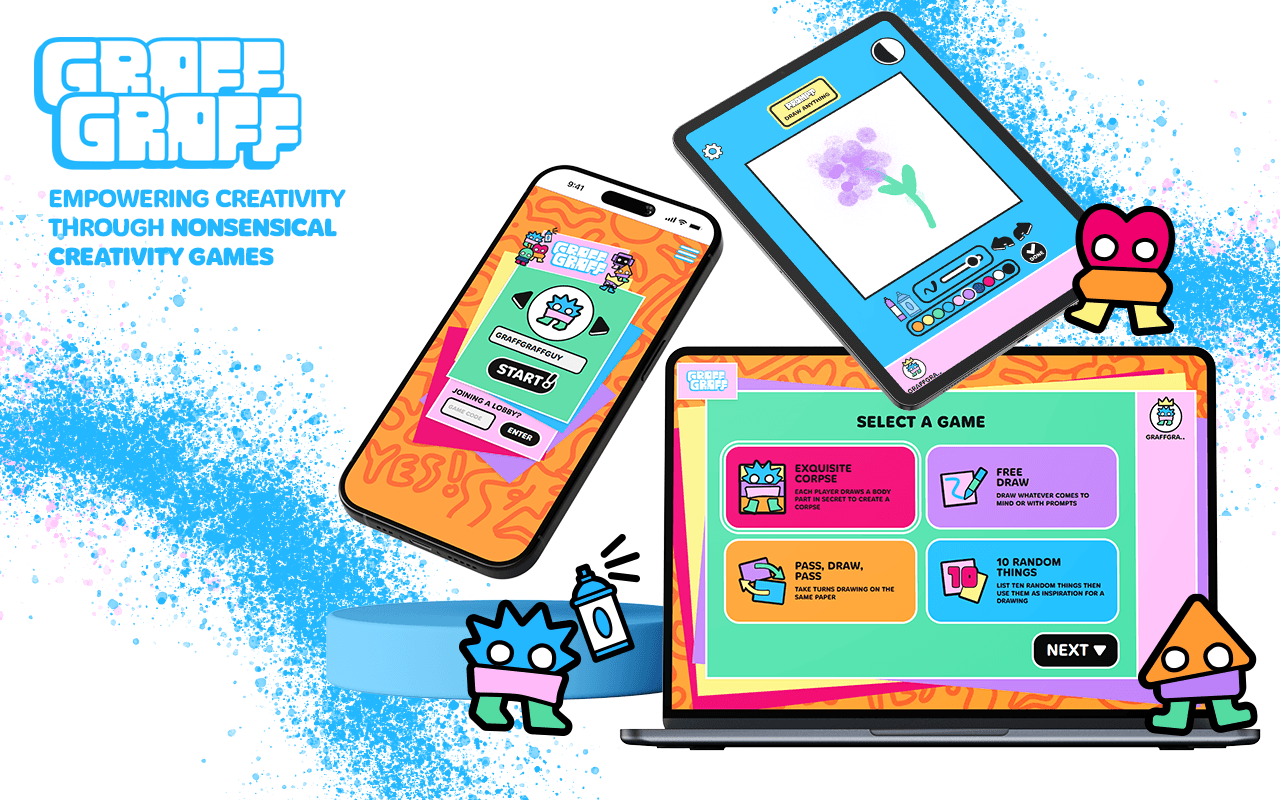
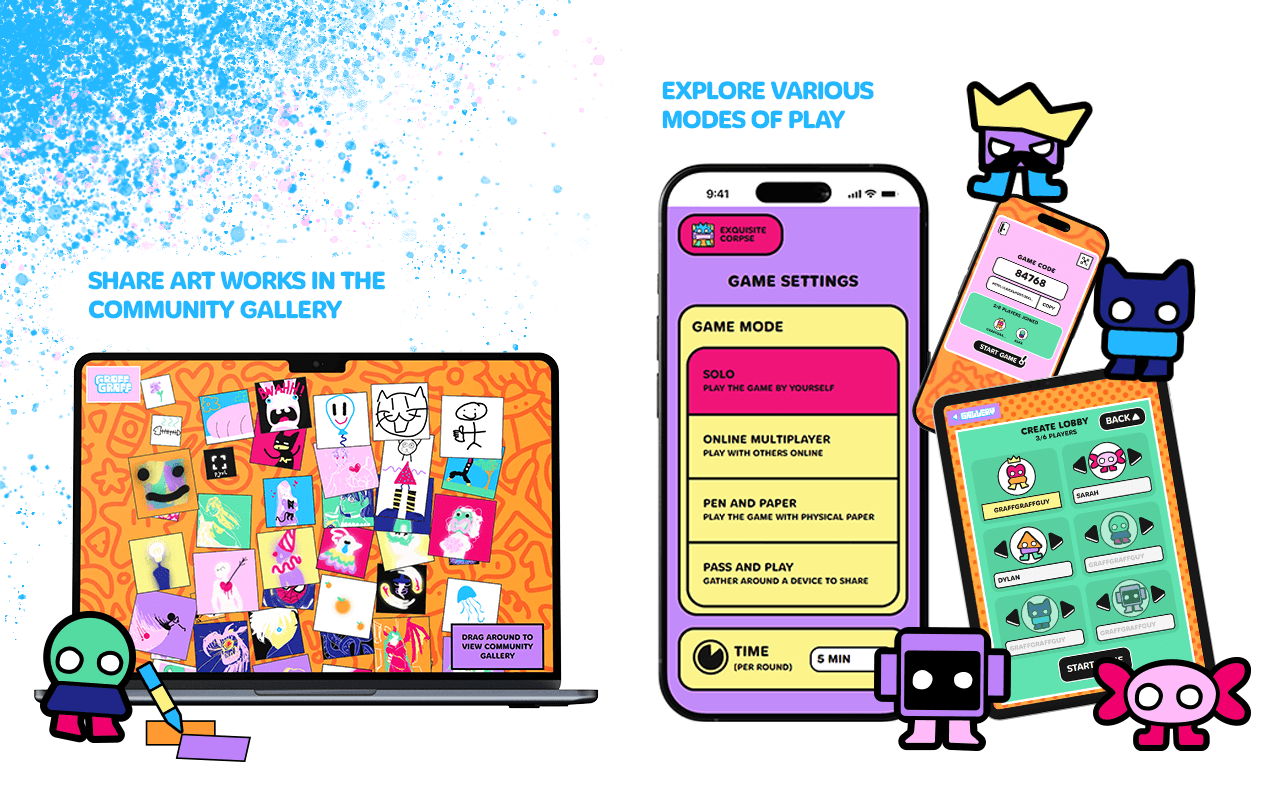
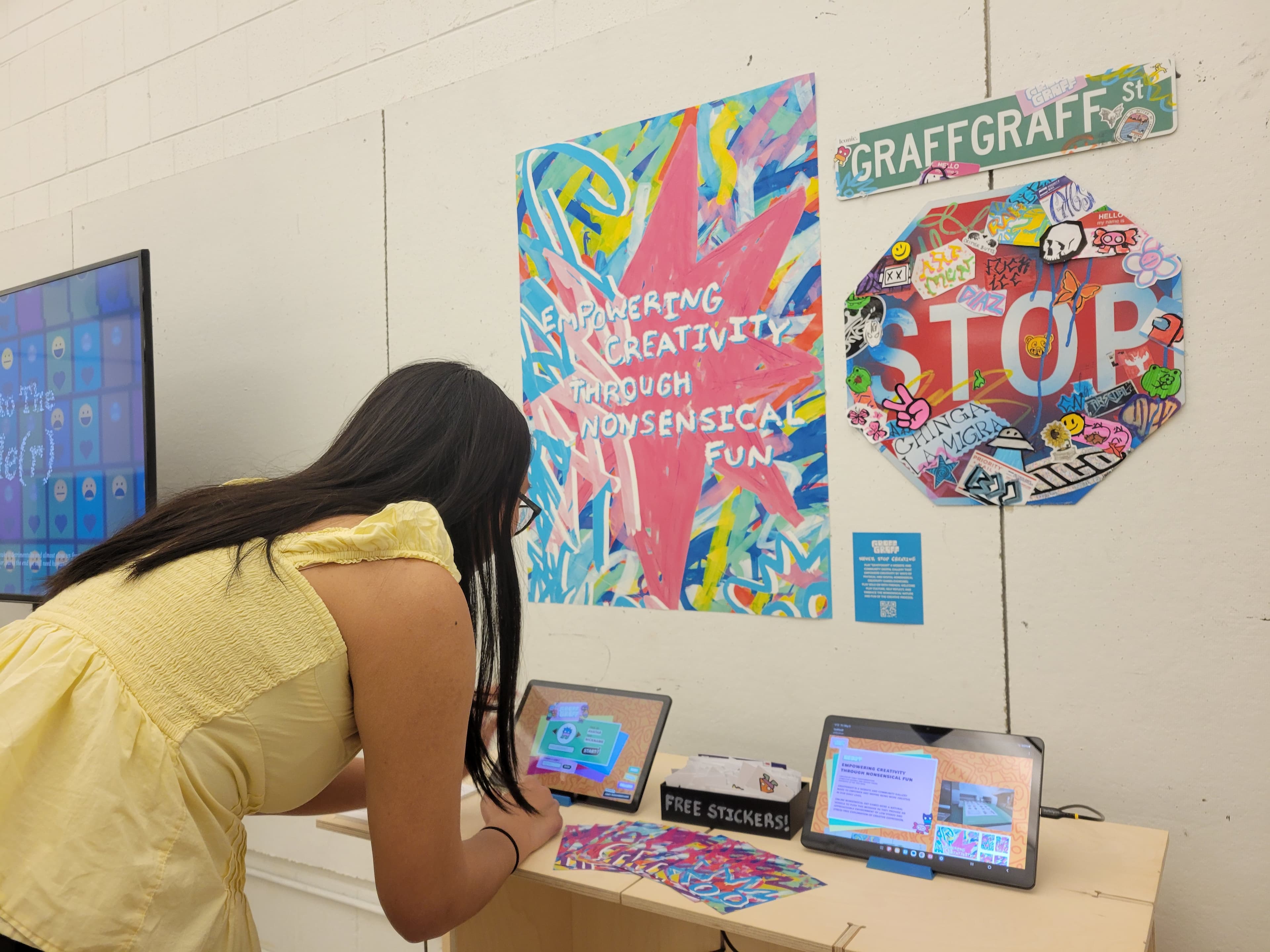
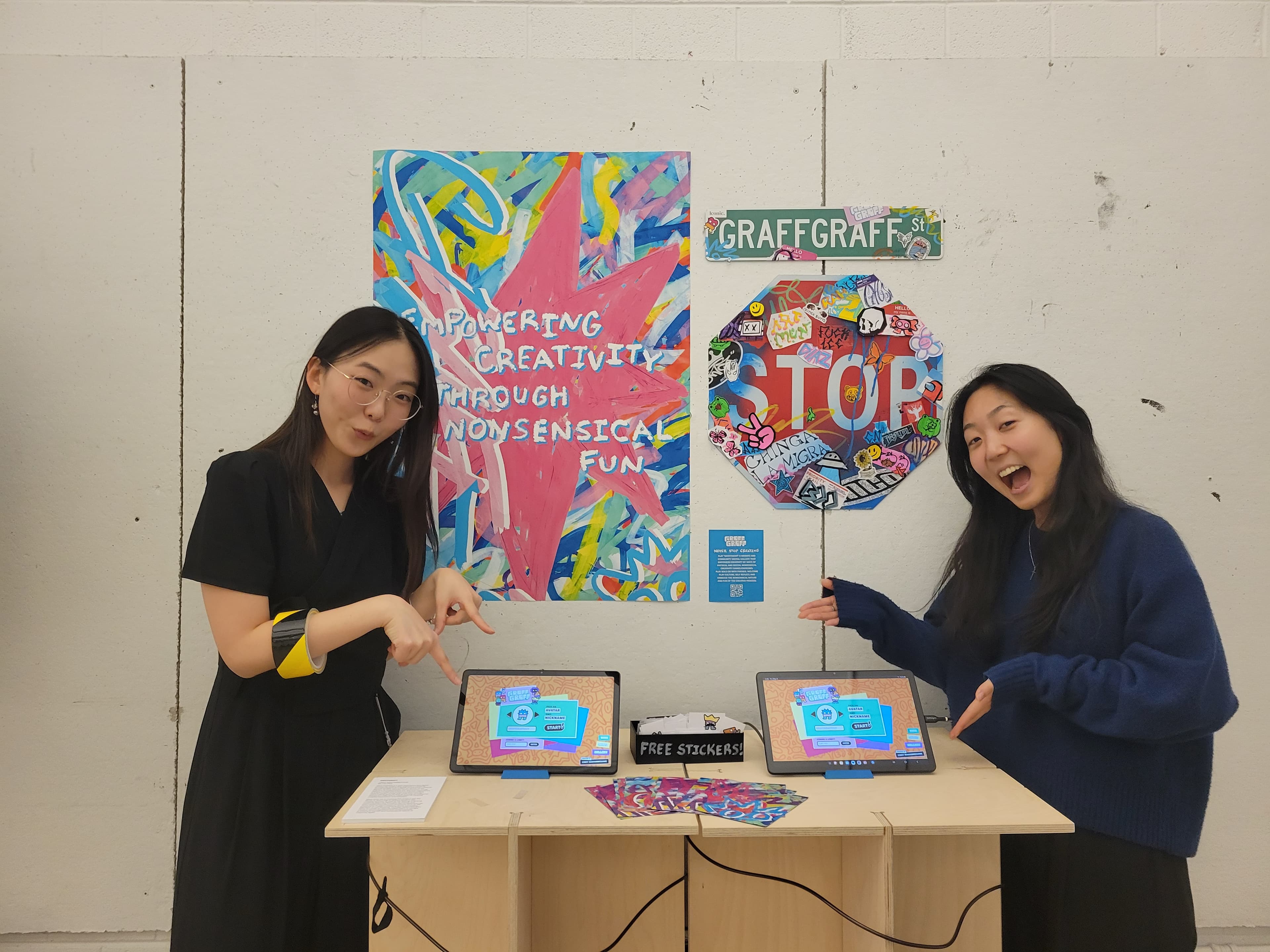
GRAFFGRAFF is a web experience and digital community gallery that empowers creativity through physical and online nonsensical creativity games. Graffiti, also known as “Graff”, is the practice of unapologetic self expression, socialization, commentary, and art. The user experience is a direct reflection of this concept providing several modes of play that stray from strictly online interactions as well as provide an unfiltered shared art collective in celebration of carefree creative expression and freedom. My work was exhibited at UIC YES! 2026.
Context
Fullstack Development, UI/UX Design
Role(s)
Solo Fullstack Developer and UI/UX Designer
Skills
Tools

Project Breakdown
Problem
People want to be more creative, so I asked myself, how can we use digital communities to inspire nonsensical creativity?
Solution
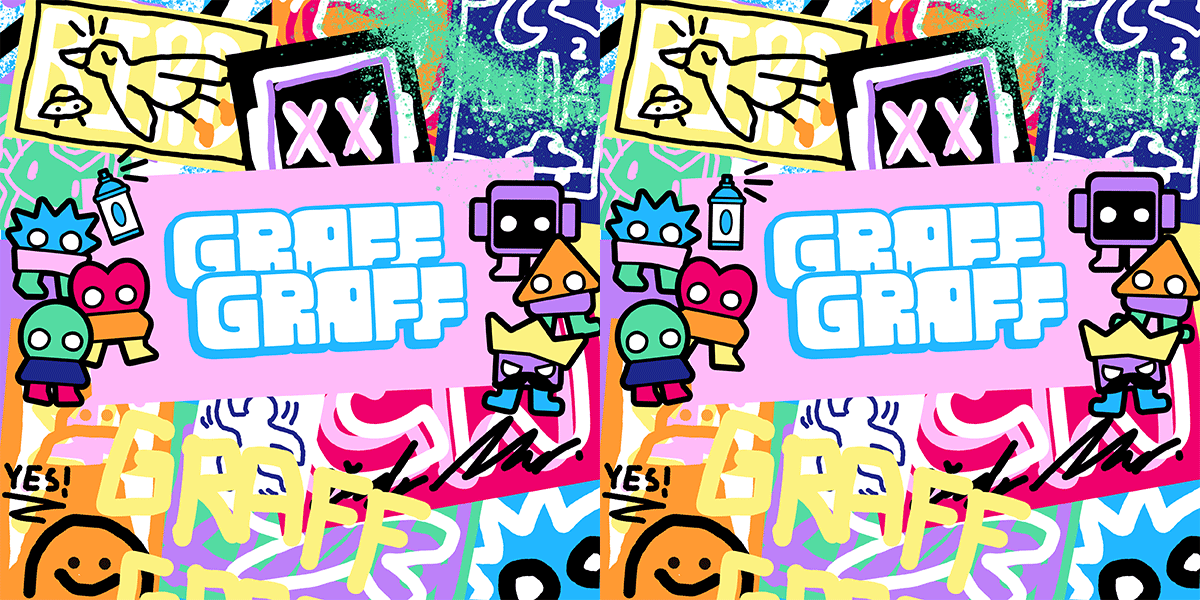
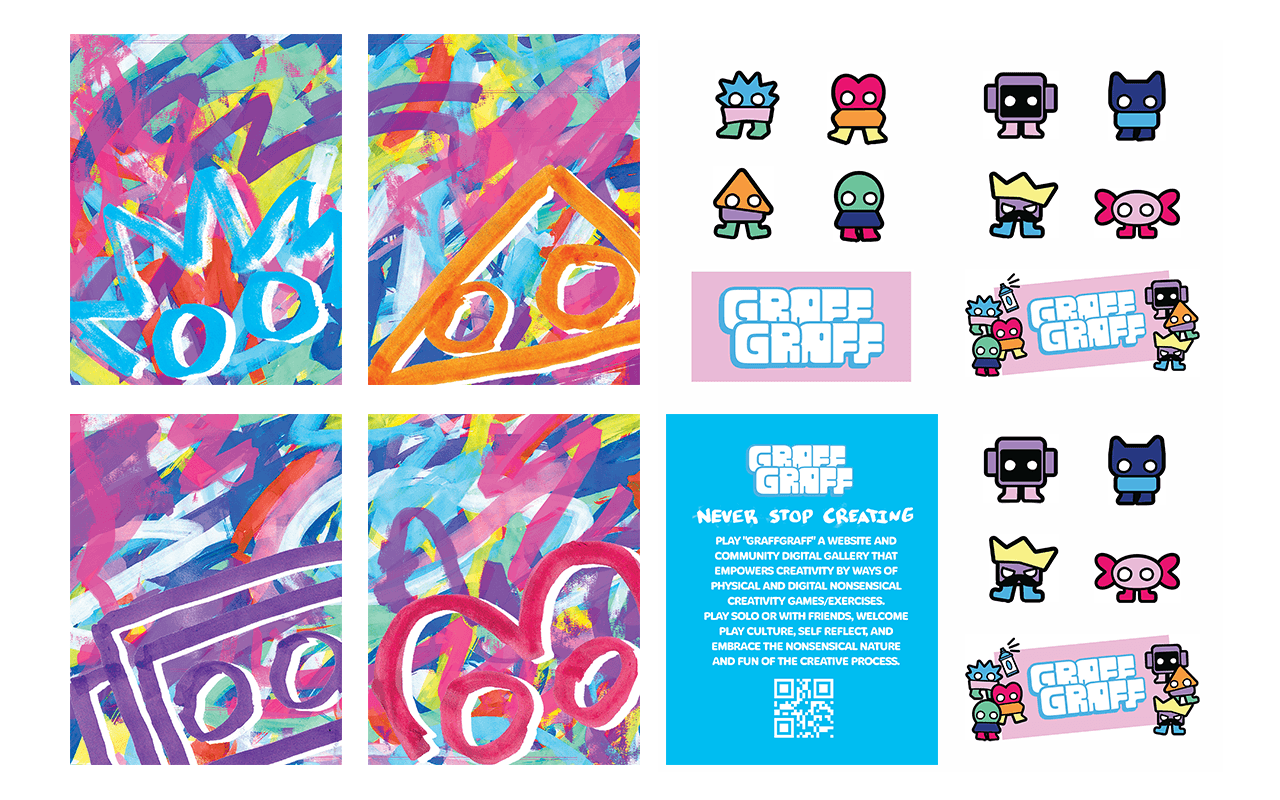
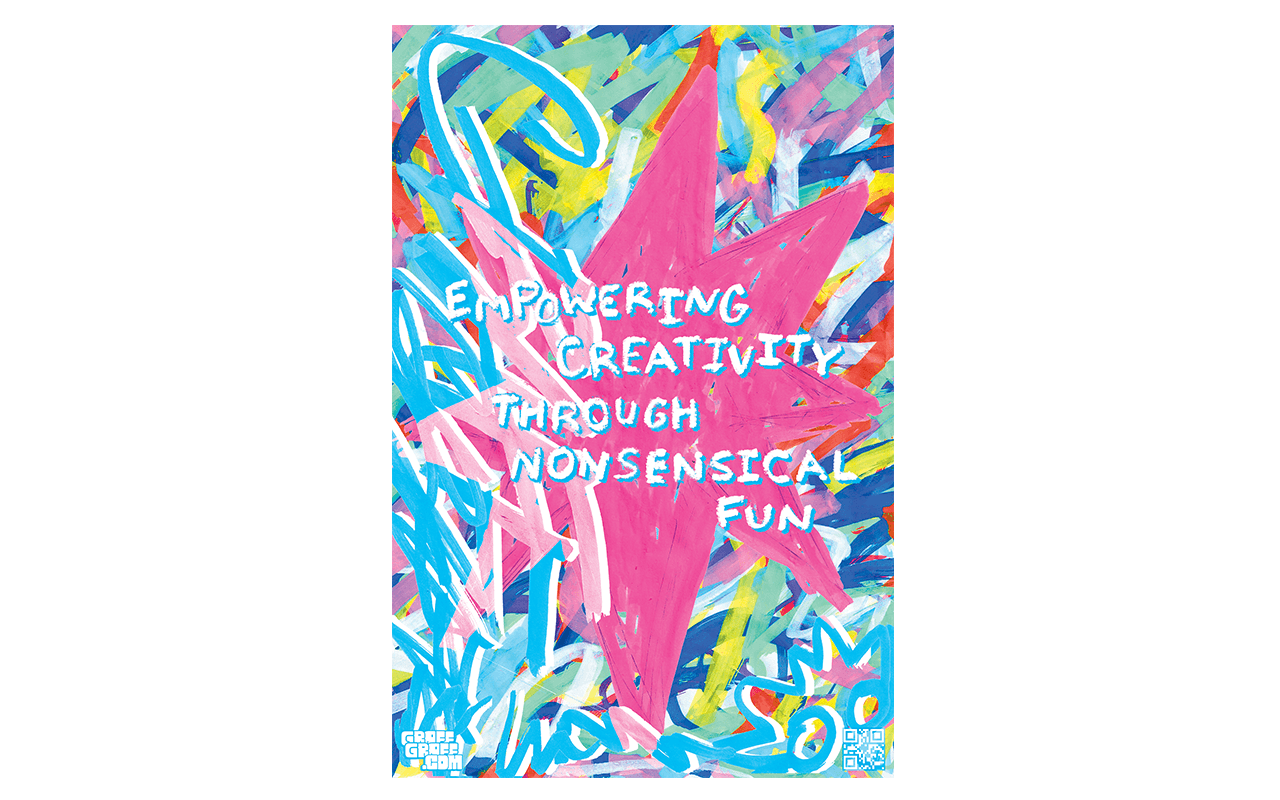
What drew me to creating this project was the desire to find a way to reduce dread to the creative process as well as the feeling of lacking creativity that I’ve observed my friends and peers experiencing. Creative discouragement can come from an assortment of reasons such as the pressure to create something good, not feeling talented, or overthinking. Through GRAFFGRAFF I strive to create an approachable place to escape creative discouragement and remind people to embrace the fun and nonsensical nature of creativity again. What I created was a website and community gallery made to empower and inspire being more creative in our daily lives through hosting online multiplayer nonsensical creativity games/exercises. Additionally, I designed a signage display, sticker sheets, custom letter forms, and handouts to promote the project
Production Process
Research & Conceptual Development
Preliminary conceptual development started with brain dumping topics related to nonsensical creativity, looking specifically for sources of nonsense and creative inspiration in my own life and in the world around me.
My research explored methodologies to nonsense, the relationship between nonsensical creativity and forming digital communities, ways to strengthen creativity, and different modes of socialization.
Research Findings
The consensus I found was that creativity is considered a skill that can be developed with practice and consistency, and that people are often more creative when they are in a social setting or collaborating with others. This lead me to experimenting with using games as a vehicle for this, experimenting with several modes of socialization/game play per creativity game.
In terms of market research, I searched for existing platforms and games that encourage creativity and self expression. Some notable places of inspiration were Gartic Phone, Jackbox, and Scribbl.io. Here I gained inspiration on user experience and game content design.
6 Field Interviews and Conducting Field Surveys (30 Responses)
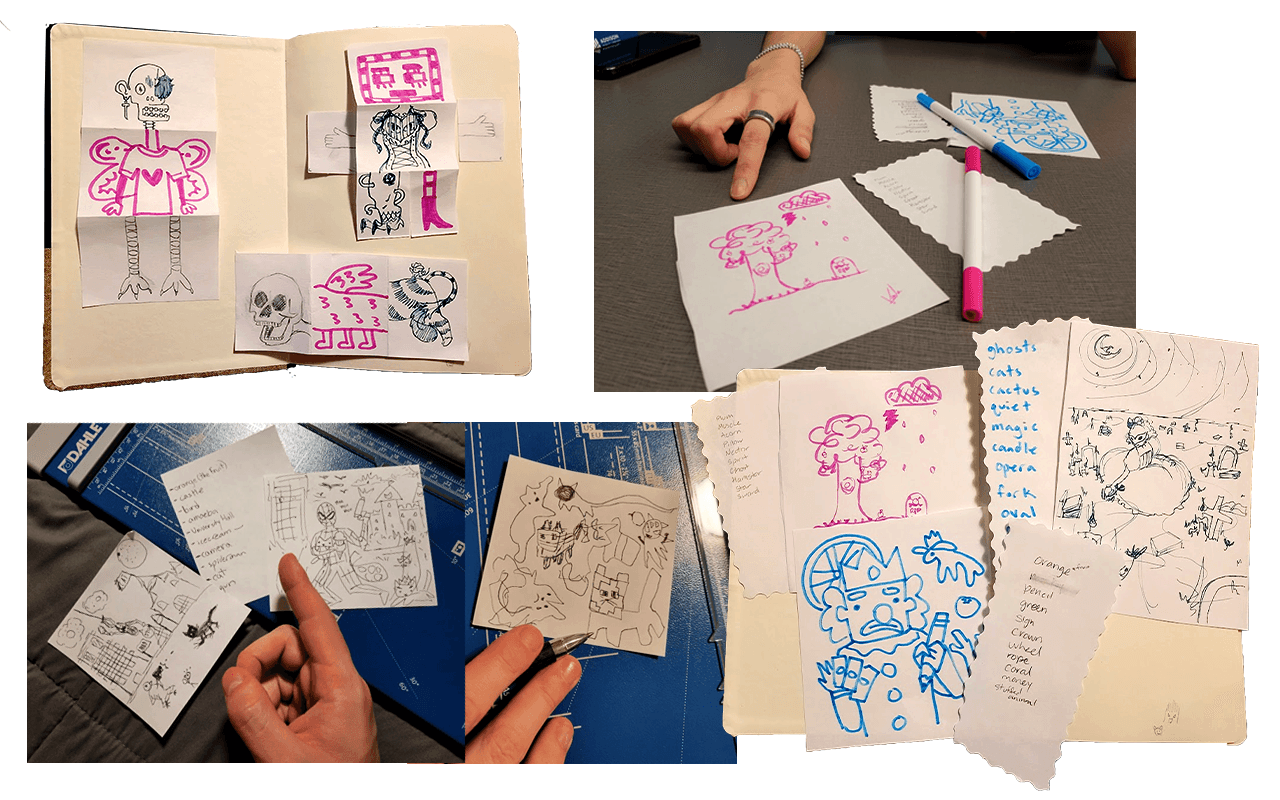
I conducted interviews with people of various levels of creativity to gain understanding on creative practices and views on creativity. I also guided them through various experimental nonsensical creativity exercises. Done with physical paper, I tested the game flow of potential games, measuring how much fun they had and how creative it made them feel afterwards.
Interview Findings
People felt doing creative things consistently/daily made them feel more creative, they preferred drawing games over verbal, and preferred playing games with a social aspect
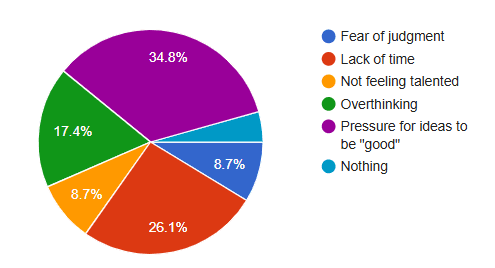
Continuing the efforts of my field interviews, I made a Google Forms survey to gain additional insight on people's current views on creativity and personal creative practices. I used these insights to help influence what exercises/features I should include in my social creativity games based on sentiment analysis regarding factors that played into creative discouragement.
Wireframing, Ideation, & Designing App Structure
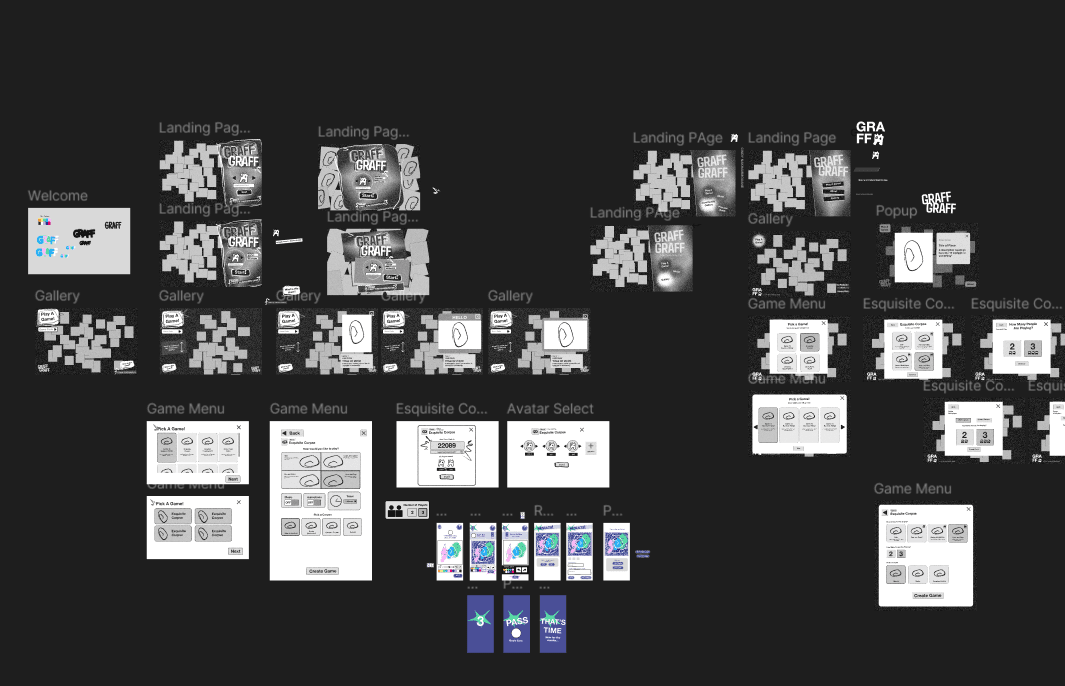
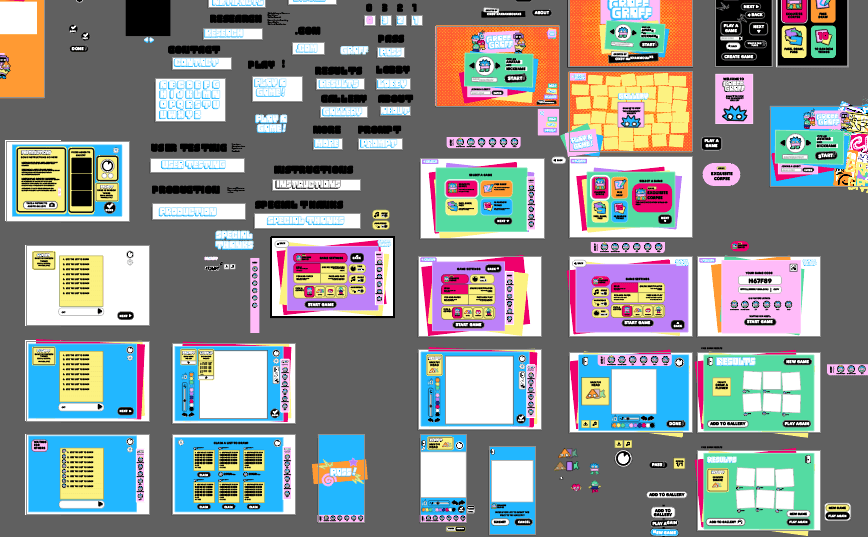
The initial UI was wireframed in Figma to understand basic UX requirements on each page. Afterwards, I transferred over to Illustrator to create formal UI designs as well as curate a visual identity. Once the visuals were complete, I began planning the website structure and developing UI components for the website, modularly creating one page or game at a time.
Visual Identity & UI/UX Design
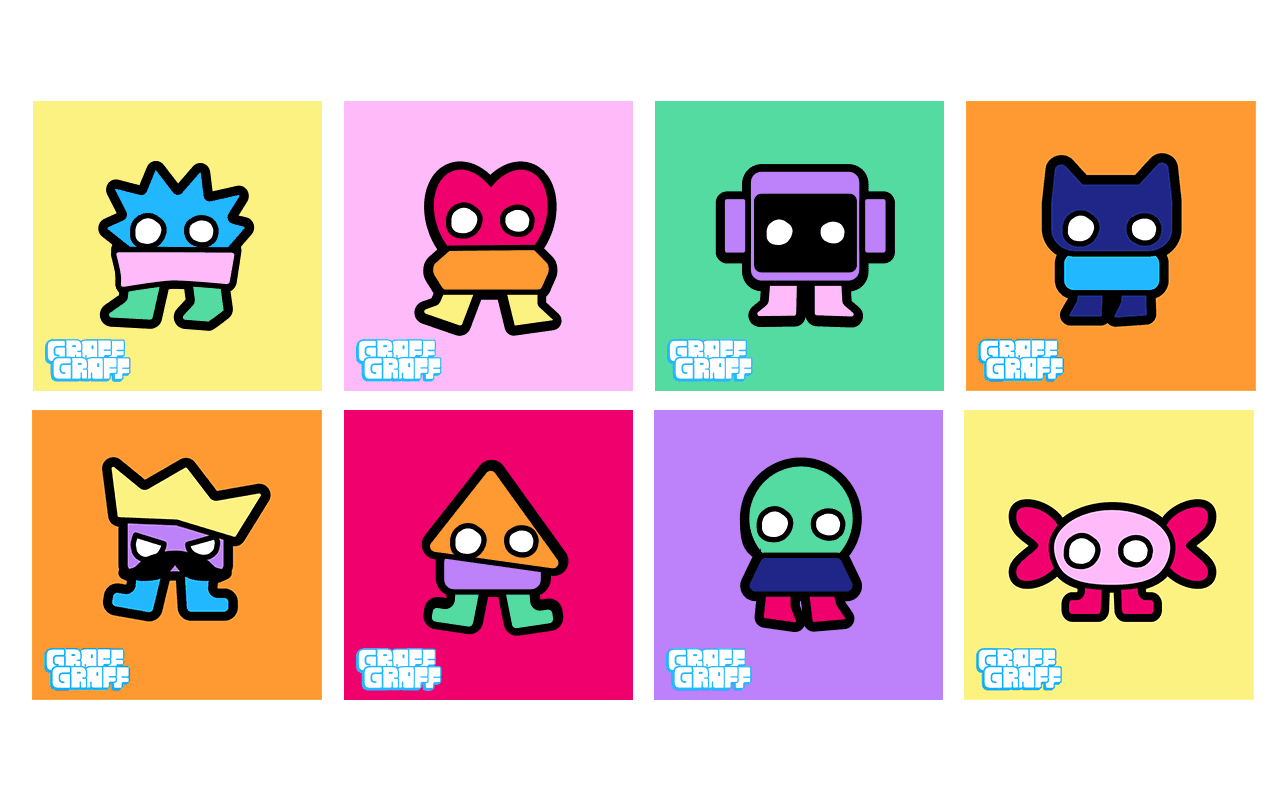
The visual identity for the game focusing on a sticker graffiti aesthetic for its association with creative expression and community that aligns with my project's values. I created GraffGraff characters that players can project themselves on to as well as created custom letter forms to build branding.
Fullstack Development & Prototyping
I followed an Agile workflow with short sprints and modular commits to keep momentum and organization. Each development cycle began with defining small testable goals then designing the feature, implementing it, validating behavior, and gathering informal user feedback. Claude Code was utilized to assist with efficient code generation and optimization.
Play Testing
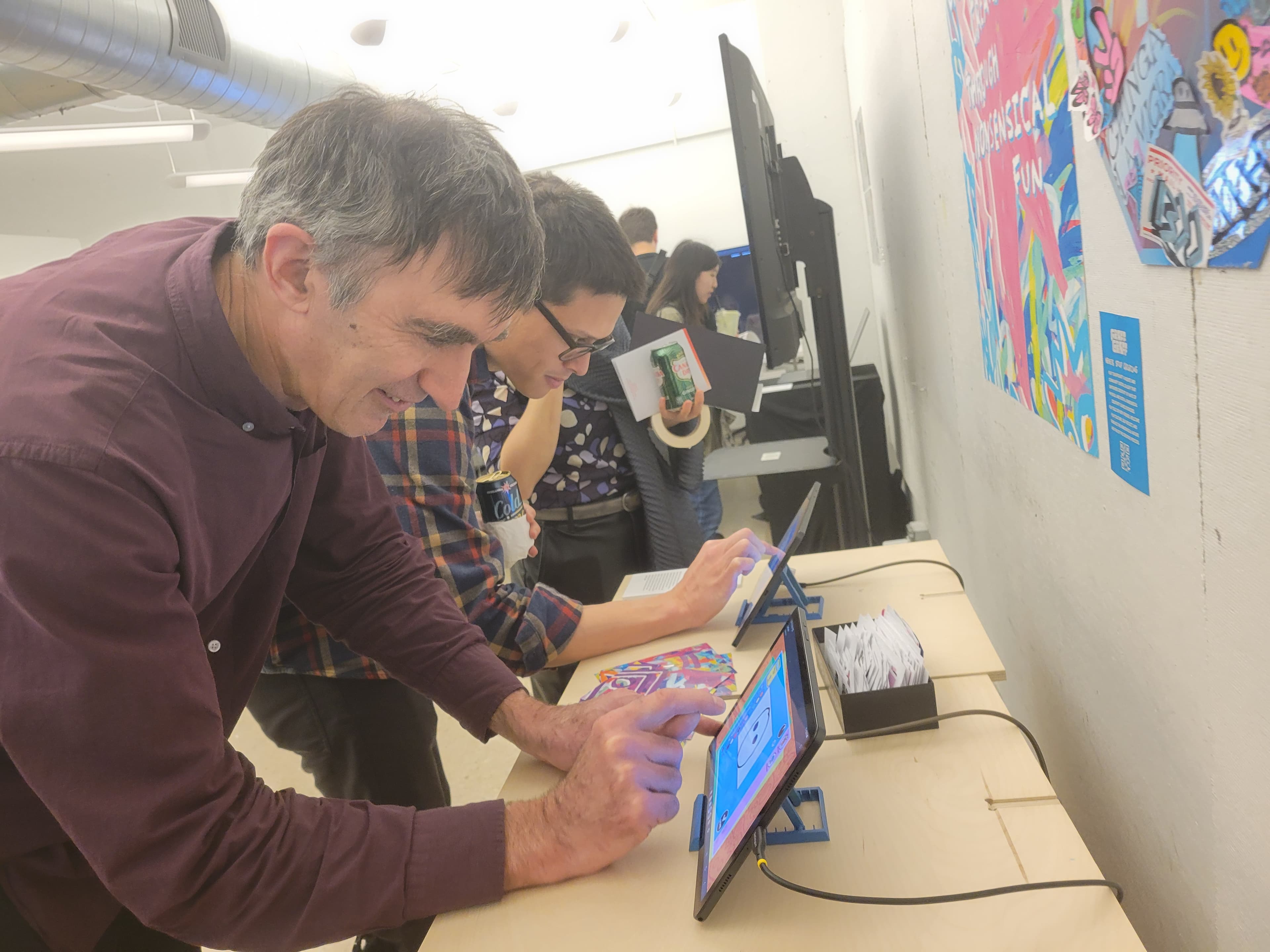
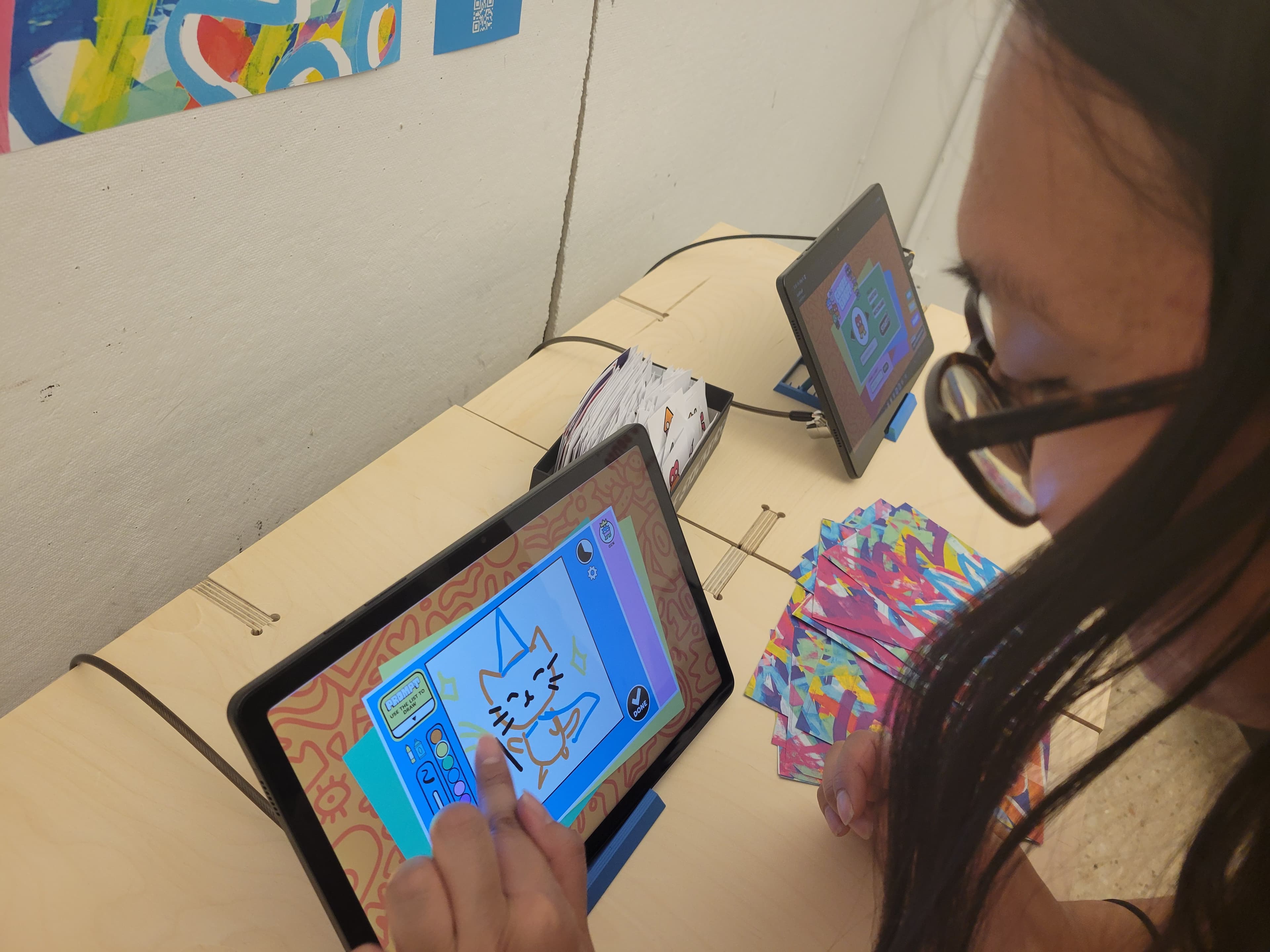
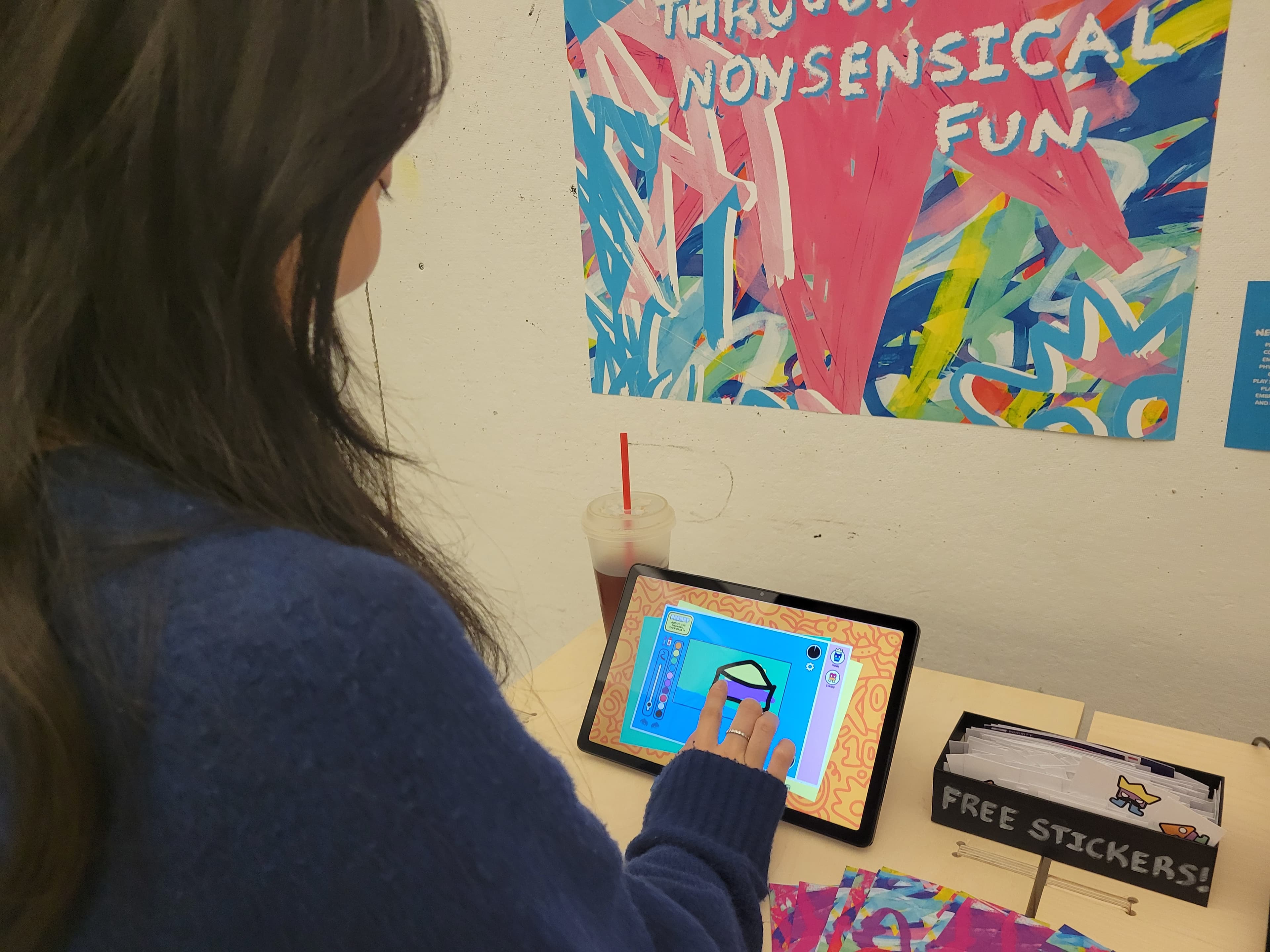
Frequent play tests with control groups took place throughout the development process to evaluate the effectiveness of the game mechanics and user experience. It was imperative the design and game flow was intuitive, friendly, and engaging. The final product was exhibited at the University of Illinois Chicago's Year End Show to an audience of 200+ people,
Next Milestones
Further developments on GraffGraff would be focused on expanding the game's multiplayer features such as providing real-time communication and collaborative gameplay options as well as implementing more game options and music direction.
Go back to the top